Trance Chord Progressions
Trance often uses familiar minor-key harmony, but phrase length, voicing, bass movement and sound design can completely change how that harmony feels.
Trance does not have one magic chord progression.
A progression can look completely ordinary on paper and still sound unmistakably trance once it is voiced widely, placed over a driving bass line and played by a supersaw or pad.
The reverse is also true: a progression that appears in many trance tracks can sound like pop, house or a ballad when it is played differently.
That is why this guide separates two things:
- the harmonic pattern itself;
- the way trance tends to realize that pattern over time.
Both matter.
Minor harmony is a natural starting point
Natural minor, or Aeolian, is one of the most useful starting palettes for trance.
A familiar loop is:
i – ♭VI – ♭III – ♭VII
In A minor:
Am – F – C – G
This progression is not exclusive to trance. It also appears naturally in pop, EDM, house and cinematic music.
What makes it useful for trance is that it can support a strong emotional center without requiring a hard classical cadence on every loop.
The final ♭VII does not create the same dominant pull as V. When the loop returns to i, the result can feel continuous rather than completely finished.
That open quality is often useful in music designed to keep moving.
The same loop can sound much more like trance through voicing
Play:
Am – F – C – G
as four close root-position triads on a dry piano.
It may sound perfectly valid, but not especially trance-like.
Now imagine the same progression with:
- a separate bass on the roots;
- wide upper voices;
- common tones kept in place;
- smooth inversions;
- a supersaw or spacious pad;
- slower harmonic changes;
- a melody above the chord tones.
The Roman numerals have not changed.
The musical identity has.
This is one of the most important lessons in trance harmony: voicing is not cosmetic.
It can be as important as the progression itself.
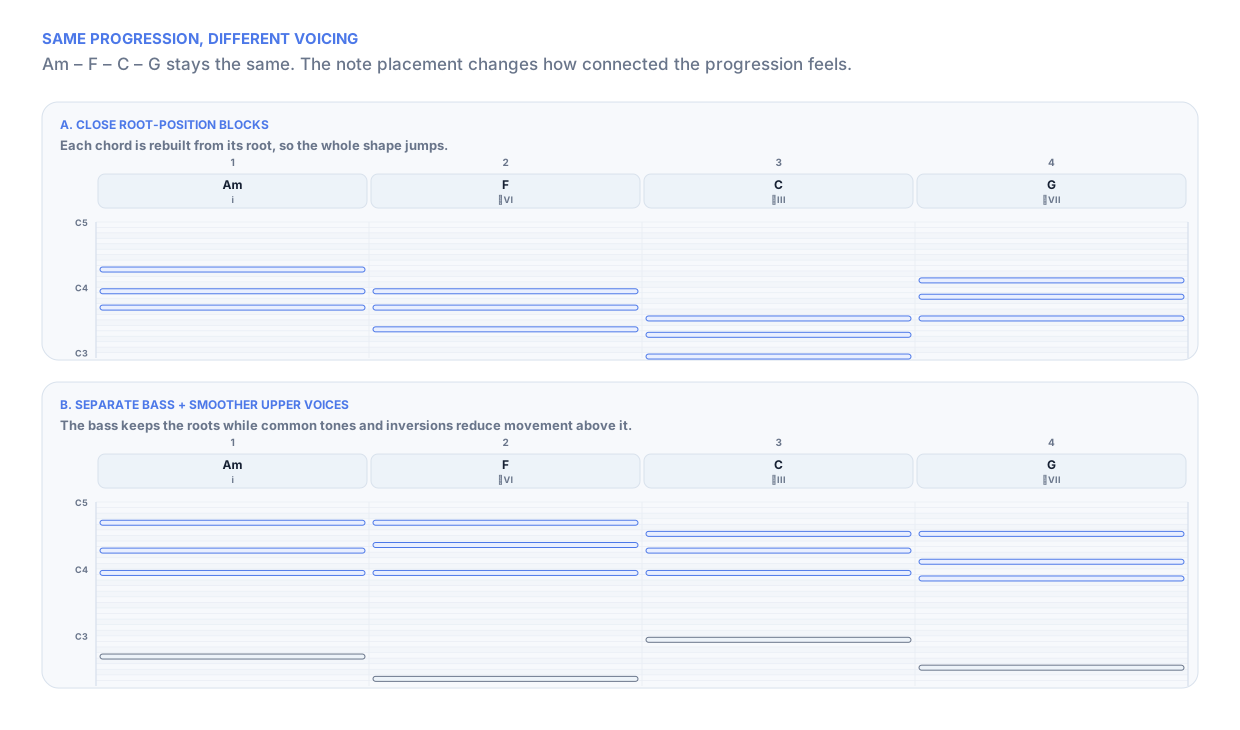
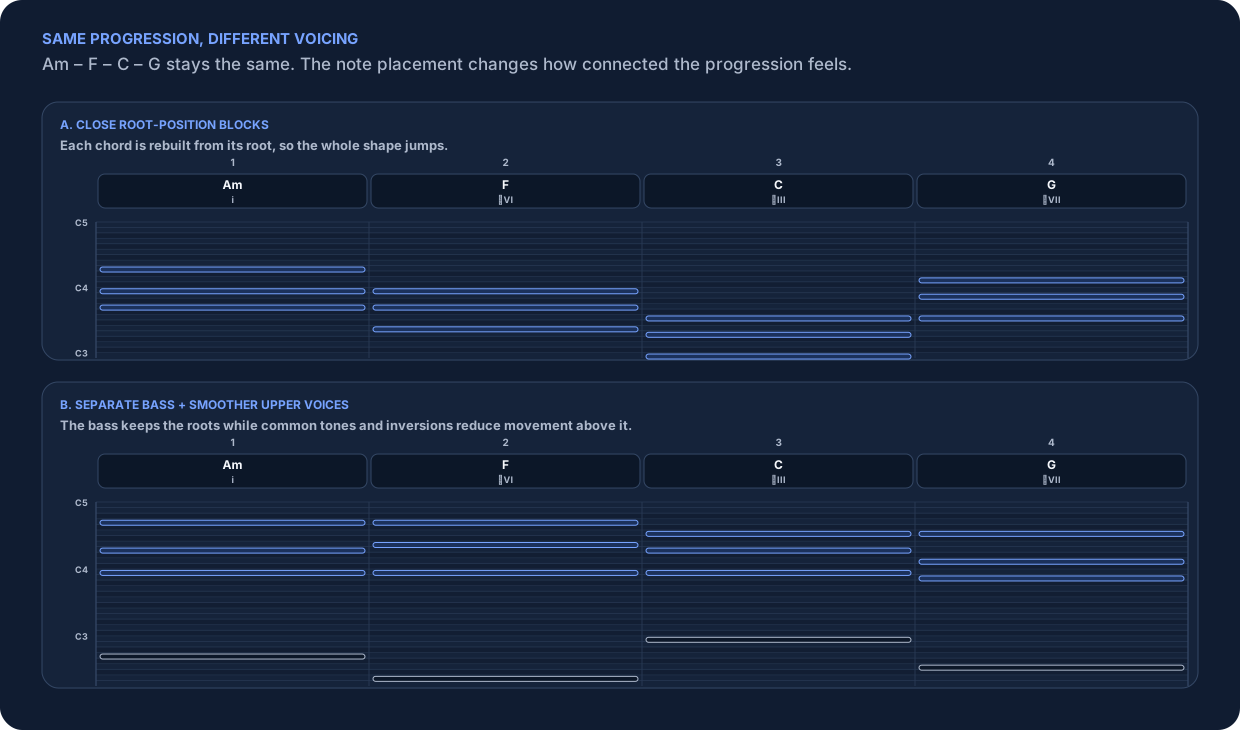
Keep the bass and upper harmony separate
A common mistake is to treat every chord as one block that moves up and down together.
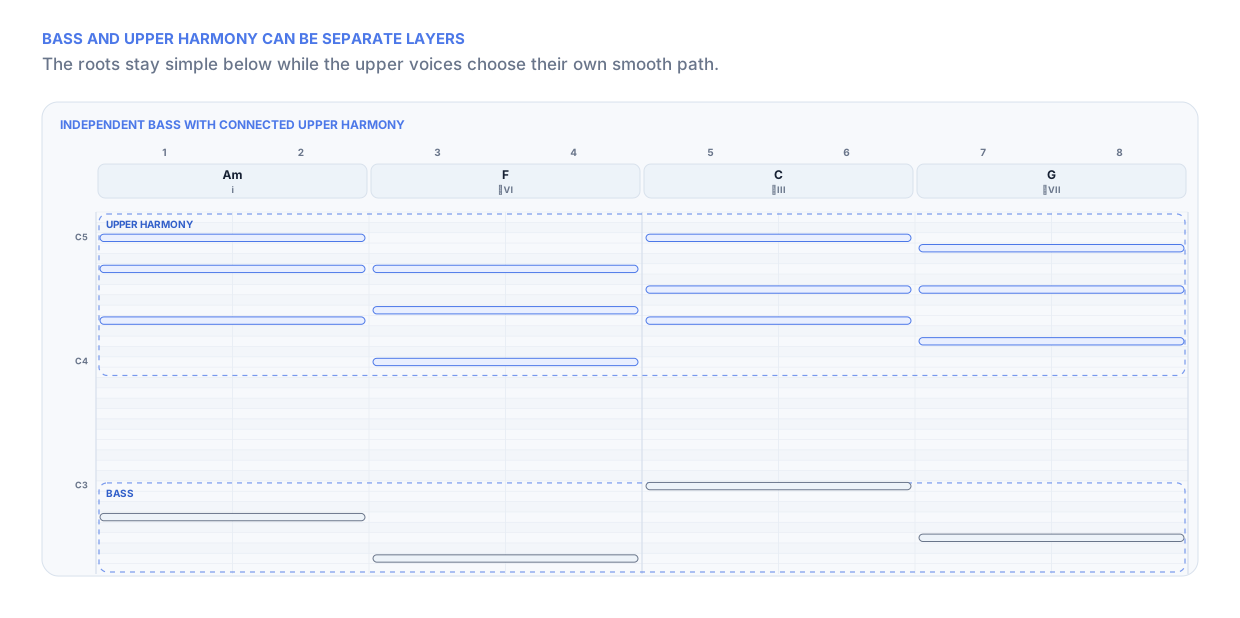
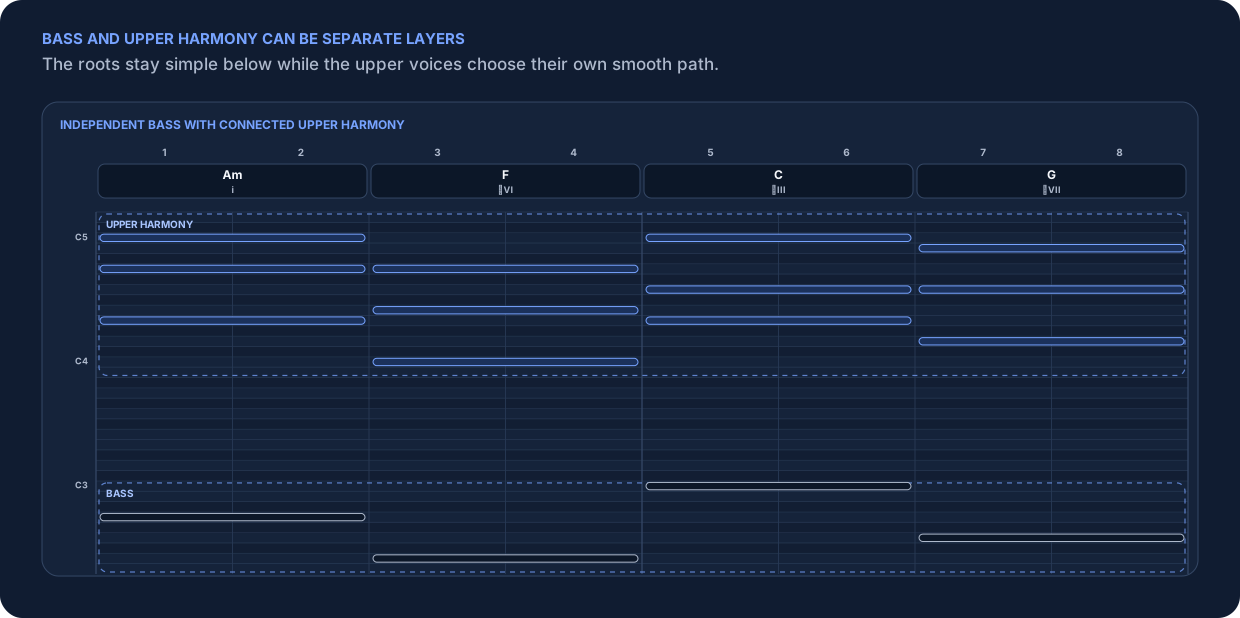
Trance often works better when the low end and the upper chord are treated as separate layers.
The bass can follow the root:
A → F → C → G
while the upper voices choose whichever inversions create the smoothest movement.
That lets the low end remain clear and stable while the chord above it moves with much smaller jumps.
For example, the upper notes of Am do not need to start with A at the bottom. If C or E gives a smoother connection from the previous chord, that can be the better choice.
The chord is still Am because the harmonic identity has not changed.
Inversions can create motion without changing the chord sequence
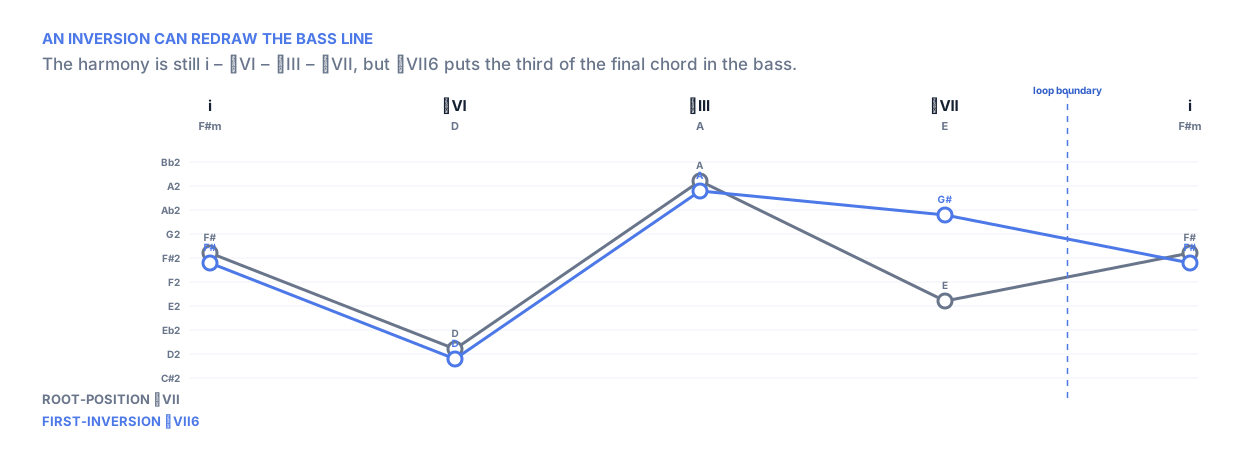
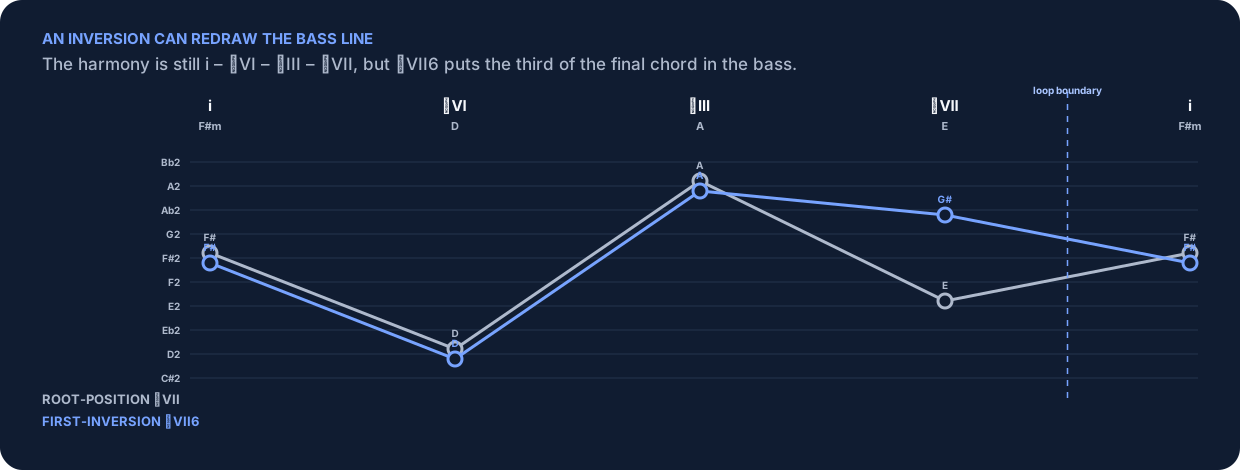
The Studio contains trance progressions where an inversion is part of the progression itself rather than just an optional voicing choice.
One variation of the familiar minor loop is:
i – ♭VI – ♭III – ♭VII6
The final ♭VII is in first inversion.
In a key such as F# minor, that means the E major chord can place G# in the bass instead of E.
The chord sequence is almost the same as the plain:
i – ♭VI – ♭III – ♭VII
but the bass line changes.
That small change can create a smoother connection into the next tonic and make the loop feel less blocky.
This is why an inversion is not merely “the same chord written differently”. In a progression, the bass note can alter the motion of the whole phrase.
Add9 and sus colors can open the upper register
Trance often benefits from chord colors that add openness without turning the harmony into dense jazz voicings.
For the minor-axis family above, a useful treatment can be to add ninths to selected chords:
Am(add9)
F(add9)
C(add9)
while a final chord may use a suspended color such as sus2.
These are treatments, not a rule that every trance chord should contain an added ninth.
The important distinction is:
- the basic progression supplies the harmonic movement;
- extensions and suspensions change the color of that movement.
A sus chord can also remove the third temporarily, making the chord feel less clearly major or minor.
That can be especially effective in a wide pad or supersaw voicing where the listener hears the movement of the top notes very clearly.
Harmonic minor creates a stronger dominant pull
Natural minor gives us a minor v chord.
In A natural minor:
v = Em
That can work well in an open loop.
But trance also makes strong use of a major V in minor-key contexts:
V → i
In A minor:
E → Am
or:
E7 → Am
The note G# in E major is outside A natural minor. It is the raised 7th associated with harmonic minor.
That leading tone creates a much stronger pull toward A.
The contrast is easy to hear:
Em → Am
feels softer.
E → Am
feels more directed.
Neither is better. They serve different purposes.
Minor forms can mix rather than stay inside one scale
Real progressions do not always obey the neat classroom idea that one scale must explain every chord.
A useful trance progression in the Studio is:
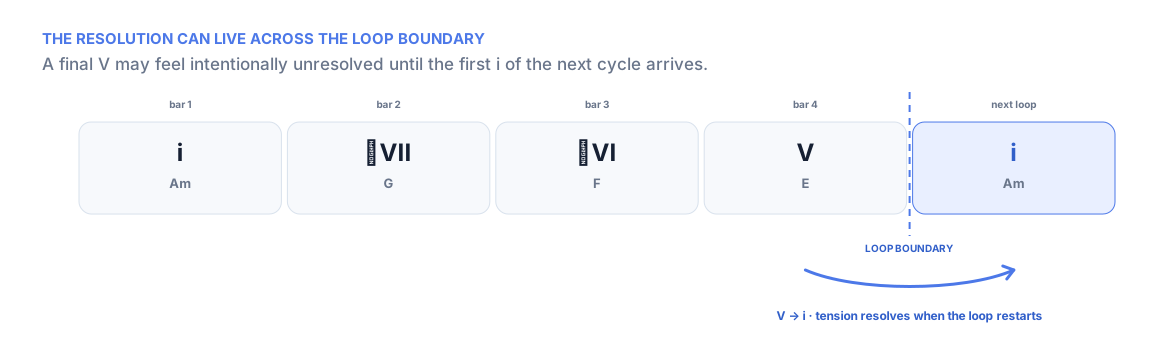
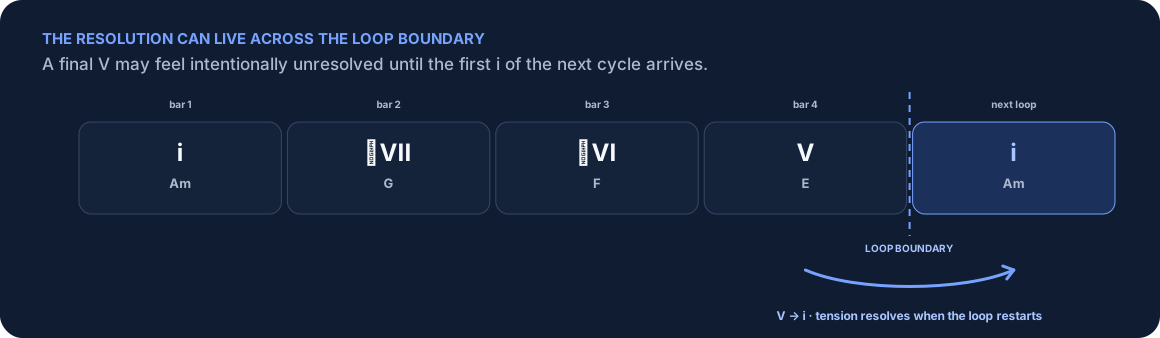
i – ♭VII – ♭VI – V
In A minor:
Am – G – F – E
Notice what happens.
The G major chord contains G natural, the ♭7 of natural minor.
The E major chord contains G#, the raised 7th associated with harmonic minor.
So the same progression uses both versions of the 7th degree.
That is not a mistake.
It is a very natural form of minor-key mixture.
The descending roots:
A → G → F → E
create clear motion, while the final major V builds tension that wants to return to Am.
When the loop repeats:
... E → Am
the cadence happens across the loop boundary.
The loop boundary is part of the progression
This is especially important in trance.
A displayed progression may end on V:
i – ♭VII – ♭VI – V
If you look at it only once, it appears unresolved.
But a looping listener hears:
i – ♭VII – ♭VI – V → i – ♭VII – ♭VI – V → i ...
The final V is therefore not a failure to resolve.
It is a source of forward momentum.
The resolution is delayed until the first chord of the next cycle.
This technique can make a repeating progression feel as if it is constantly pulling itself forward.
Trance harmony does not have to fit into four bars
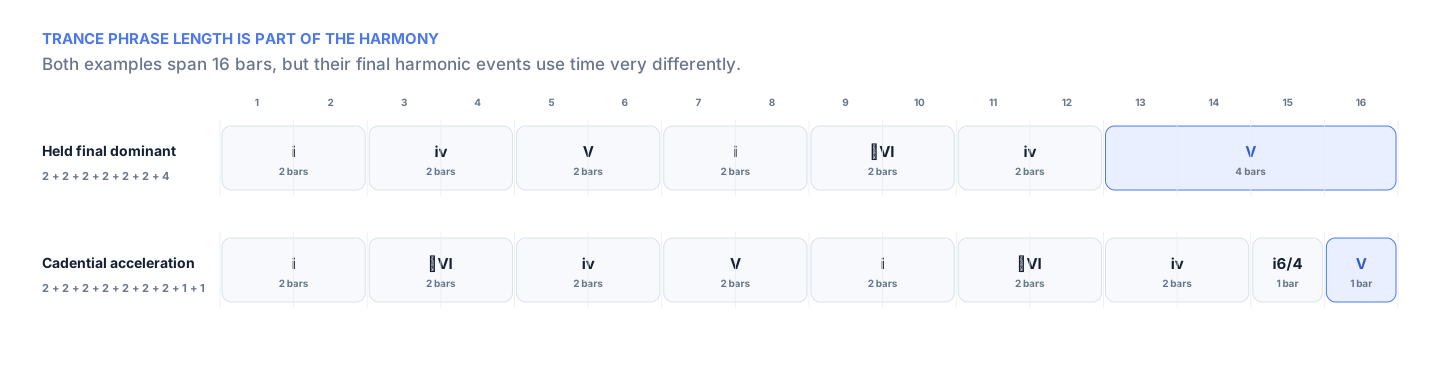
Four-chord loops are convenient, but some of the most interesting trance harmony works at a longer phrase level.
The Studio includes source-backed forms that preserve seven, eight or nine harmonic events rather than compressing them into a generic four-chord loop.
One example uses:
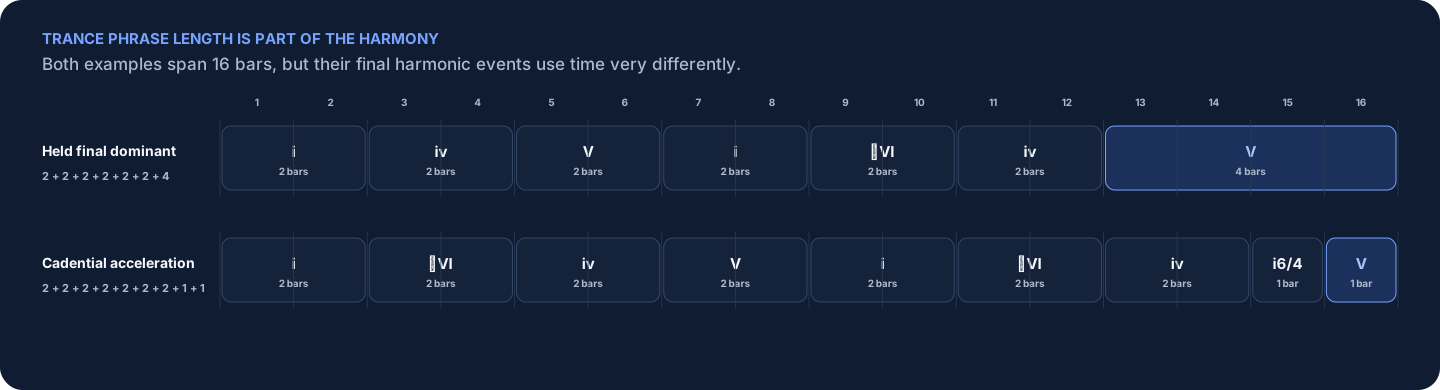
i – iv – V – i – ♭VI – iv – V
The first six events each last two bars, while the final V lasts four bars.
That creates a 16-bar form:
2 + 2 + 2 + 2 + 2 + 2 + 4 = 16 bars
The held final dominant matters.
If we shortened it just to make every chord equal, we would change the shape of the phrase.
The longer V gives the harmony time to build expectation before the loop returns to i.
Unequal chord lengths can be structural
Another source-backed trance form in the Studio has nine events:
i – ♭VI – iv – V – i – ♭VI – iv – i6/4 – V
The timing is:
2 + 2 + 2 + 2 + 2 + 2 + 2 + 1 + 1 bars
Again, that totals 16 bars.
The final two chords happen in half the time of the earlier changes.
That creates a small acceleration into the end of the phrase.
The penultimate chord is a second-inversion tonic:
i6/4
followed by:
V
So the last two bars are not simply “two extra chords”.
They form a cadential gesture.
This is a good example of why harmonic rhythm belongs to the progression.
The order of the chords is only half the information.
A held dominant can make the next phrase feel bigger
A long final V can work especially well before:
- a new loop;
- a melodic return;
- the end of a breakdown;
- a lift into a more energetic section.
The harmony has stopped moving, but the tension has not disappeared.
That gives the arrangement room to build around one chord.
Filters can open.
A snare roll can build.
A melody can hold or climb.
A riser can increase intensity.
Then the return to i releases the stored harmonic tension.
The chord progression and the arrangement are doing the same job together.
Breakdowns and drops do not always need different chords
A trance breakdown may sound harmonically much richer than the main section even when both use the same progression.
The breakdown may use:
- long pads;
- wide inversions;
- additional upper chord tones;
- a melody that exposes the harmony;
- little or no bass.
The energetic section may reduce the same chords to:
- simpler stabs;
- a strong root bass;
- fewer sustained upper notes;
- more rhythmic repetition.
So contrast between sections does not require a completely new progression.
Sometimes keeping the harmony recognizable makes the return more satisfying.
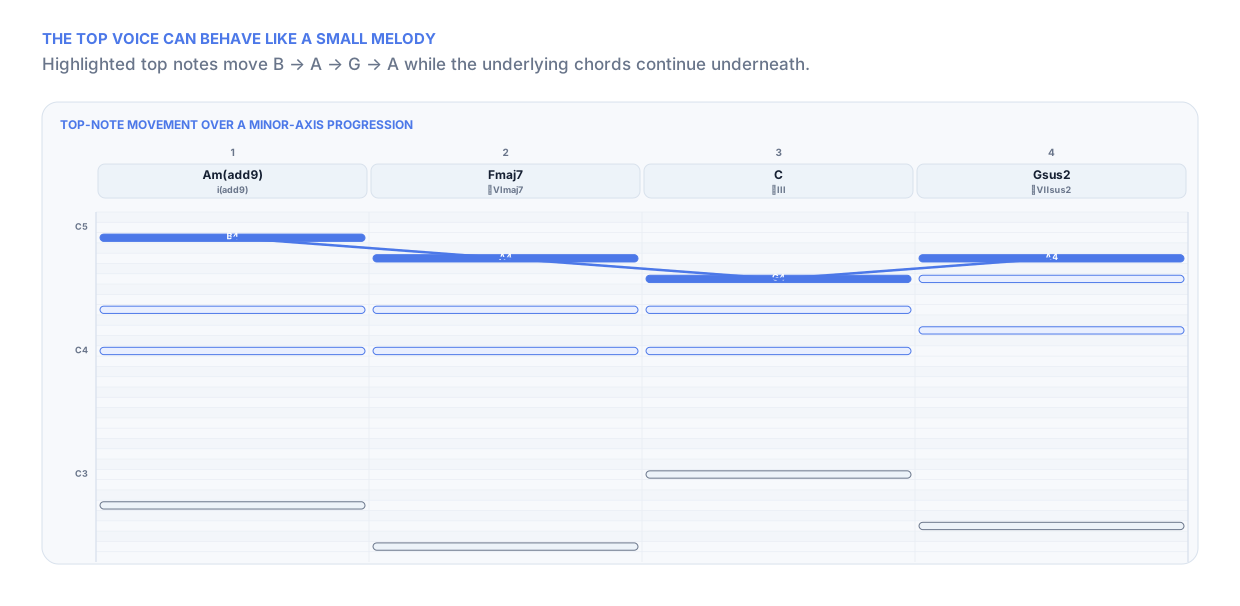
Top-note movement can create a second melodic layer
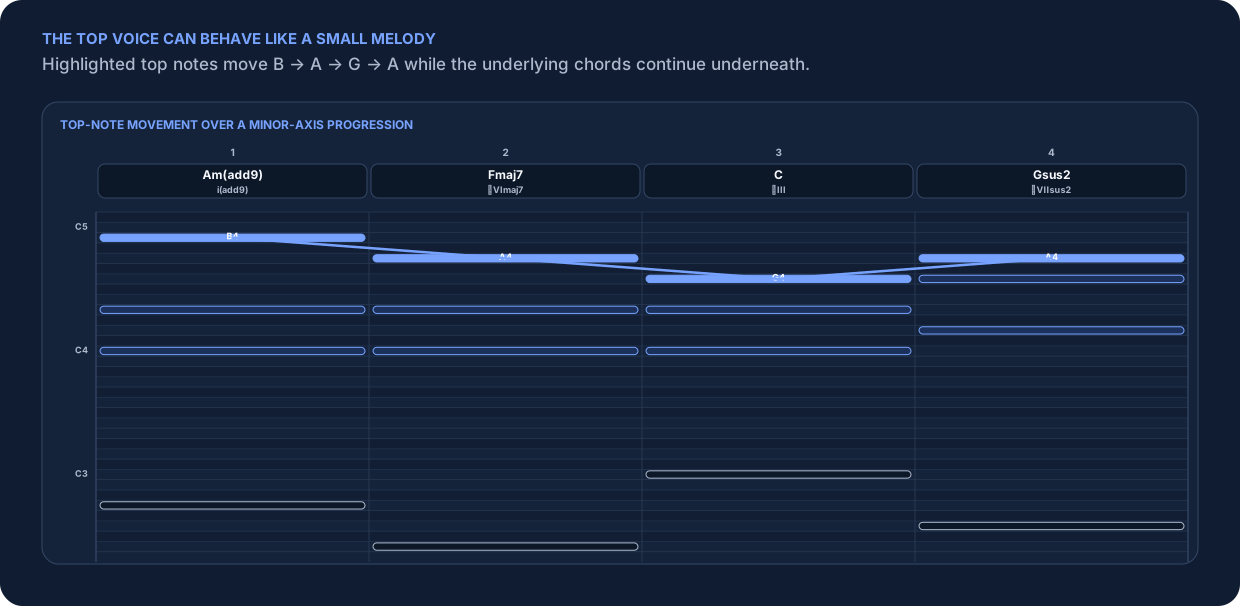
When the upper voice of each chord is chosen carefully, the chord progression can contain a hidden melodic line.
Suppose the harmony stays the same but the top notes move smoothly from chord to chord.
The listener can follow that line even without consciously identifying it.
This is one reason smooth inversions matter so much in trance.
It is also why changing one upper note near the end of a long chord can create useful motion toward the next harmony.
The underlying chord may remain in place while one suspended, added or neighboring tone provides a small connection into what follows.
That kind of detail belongs to realization and voice leading, not necessarily to the Roman-numeral progression itself.
Wide does not mean “put every note everywhere”
Supersaws can make almost any chord sound enormous.
That is also the danger.
If every chord contains:
- the root in several octaves;
- a third;
- a fifth;
- a seventh;
- a ninth;
- a suspension;
- multiple detuned layers;
the harmony can quickly become cloudy.
Wide trance voicing works best when the notes have clear roles.
Low frequencies usually benefit from simplicity.
Color tones are often more effective higher in the register.
A separate bass can provide the root while the chord above uses a smoother inversion.
“Bigger” harmony is not always “more notes”.
The supersaw is not the chord progression
Sound design has such a strong identity in trance that it can hide weak harmonic decisions.
A supersaw makes notes wide, bright and emotionally intense.
But the patch itself does not create harmonic direction.
If the chord movement is awkward, the supersaw only makes that awkwardness larger.
It helps to test a progression on a simpler sound occasionally.
If the voice leading still makes sense on a piano or basic pad, the harmony itself is probably doing useful work.
Then the trance sound can amplify it instead of rescuing it.
Do not resolve every phrase the same way
A strong:
V → i
resolution can be very satisfying.
If it happens at the end of every four bars, however, the music may begin to feel too neatly closed.
Trance often benefits from different levels of resolution:
- an open four-bar loop;
- an eight-bar phrase with a small change;
- a 16-bar phrase with a stronger dominant;
- a breakdown that holds tension;
- a later return that finally resolves more clearly.
The harmonic architecture can therefore operate on several timescales at once.
A practical Trance starting point in the Studio
A useful first exploration is:
- choose Trance as the style;
- start with Minor / Aeolian for open emotional loops;
- try Harmonic Minor when you want stronger dominant tension;
- compare a simple four-chord loop with one of the longer forms;
- listen to the bass movement, not only the chord names;
- pay attention to how the upper notes connect;
- try a wide sound, but also audition the progression on a simpler instrument.
The Studio’s Trance profile favors wide, smooth upper voices and an independent bass, but those are starting points rather than laws.
A useful trance progression should give you more than four chord labels.
It should create a harmonic path that still feels compelling after the loop has repeated many times.