House Chord Progressions
House can thrive on a two-chord vamp or a longer emotional loop. Groove, voicing, chord color and repetition often matter as much as the chord sequence itself.
House music does not have one correct chord progression.
Some tracks use only one or two harmonies for long stretches. Others use four-chord loops, richer seventh chords or longer phrases that move much more clearly from one harmonic area to another.
What often matters is not how many chords are present, but how the harmony supports the groove.
A simple progression with the right rhythm, bass movement and voicing can sound more convincing than a complicated progression that constantly demands attention.
This guide focuses on recurring approaches that are useful when writing house, not on rules that every house track must follow.
Repetition is part of the harmony
In many genres, repetition is something the arrangement tries to hide.
In house, repetition can be one of the main strengths.
A two-chord vamp such as:
Am7 → D7
can repeat for a long time if the rhythm, bass, percussion, filtering and arrangement continue to evolve around it.
The harmony stays stable while the track develops in other dimensions.
That is why a house progression should not automatically be judged by how many different chords it contains.
Sometimes the most useful question is not:
What chord should come next?
but:
Does the harmony actually need to change yet?
Chord stabs are rhythm, not necessarily new harmony
House often uses short repeated chord attacks.
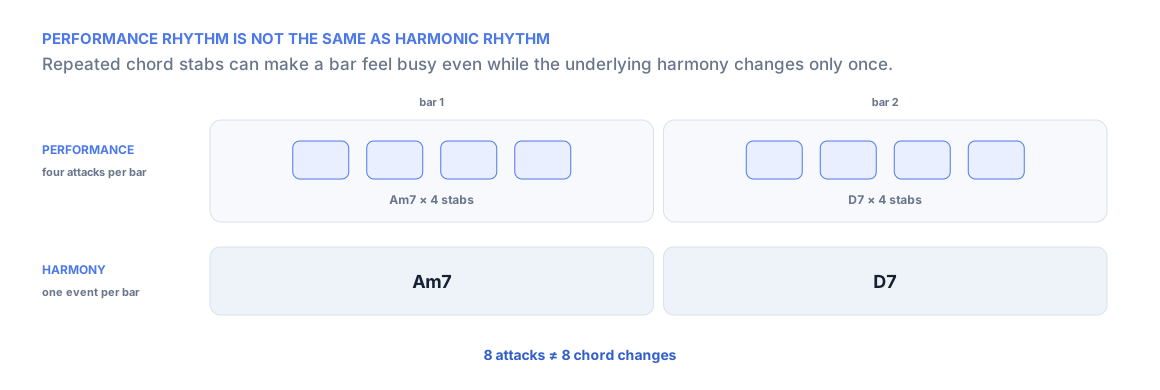
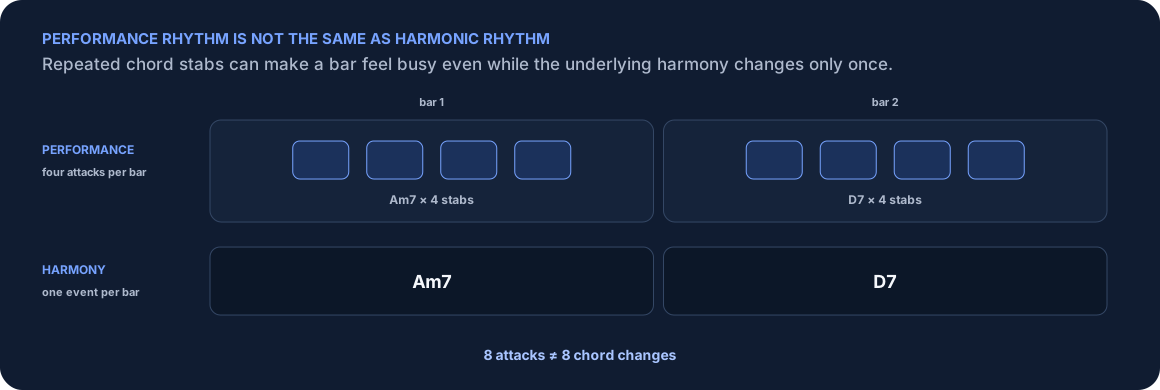
A chord may be played four times in one bar:
Am7 Am7 Am7 Am7
but harmonically that can still be one Am7 event.
The repeated attacks are articulation and rhythm.
This distinction matters when thinking about chord progressions. A busy piano pattern can sound very active while the underlying harmony barely changes.
The same idea applies to pads and sustained chords in the opposite direction: one harmony may last for two bars while the sound itself moves through filtering, modulation or automation.
So harmonic rhythm and performance rhythm are related, but they are not the same thing.
Minor is a natural starting point
Natural minor, or Aeolian, is a useful starting palette for many house styles.
It can support emotional or smooth harmony without requiring strong classical-style cadences.
One compact example from the Studio’s House catalog is:
i7 – v7 – iv7
In A minor:
Am7 – Em7 – Dm7
The seventh on each chord adds color, but the progression remains simple.
There is no major V forcing a strong return to Am. That gives the loop a softer, more continuous quality.
This kind of progression can work especially well when the upper notes move smoothly and the bass provides a clear foundation.
A descending minor loop can add more movement
Another House-compatible Aeolian pattern in the Studio is:
i7 – ♭VII – ♭VImaj7 – iv7
In A minor:
Am7 – G – Fmaj7 – Dm7
This creates a descending sense of motion:
- Am7 establishes the minor tonic;
- G moves down to the lowered seventh;
- Fmaj7 adds a warmer major-seventh color;
- Dm7 moves to the minor subdominant.
The progression is still loop-friendly, but it tells more of a harmonic story than a two-chord vamp.
The major seventh on F is not there because “house chords need sevenths”. It is part of this particular color.
That distinction is important. Extensions are most useful when they support the character of the progression rather than being added to every chord automatically.
Dorian can make minor harmony feel more open
Dorian is one of the most useful alternatives to natural minor in house.
Its formula is:
1 2 ♭3 4 5 6 ♭7
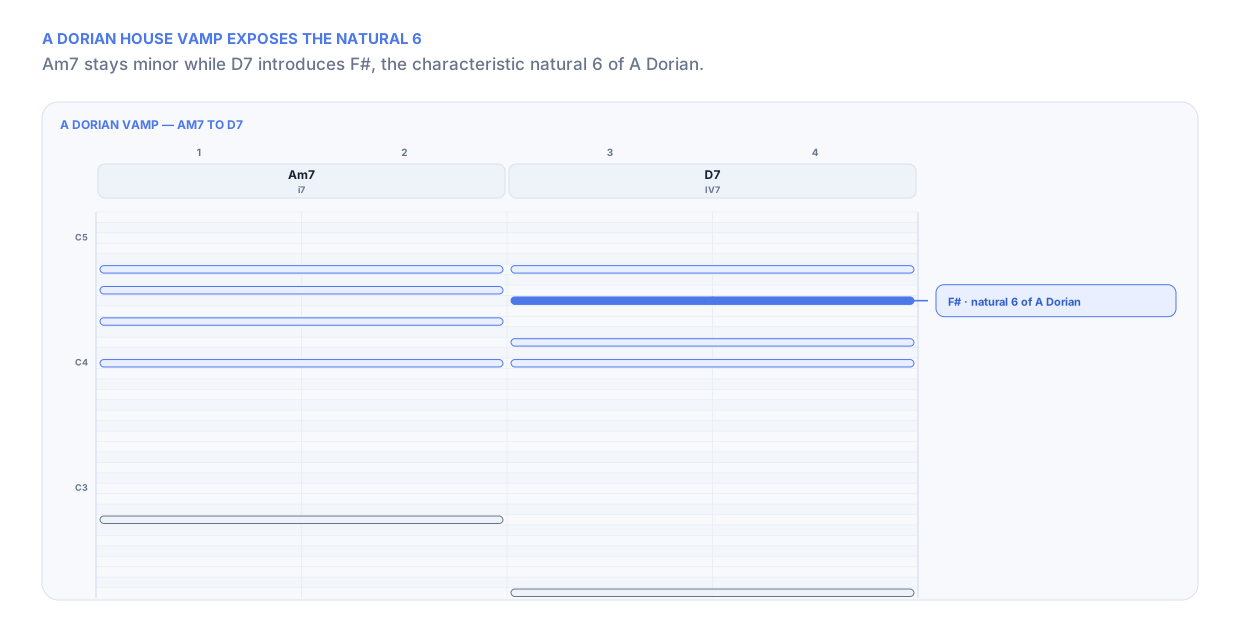
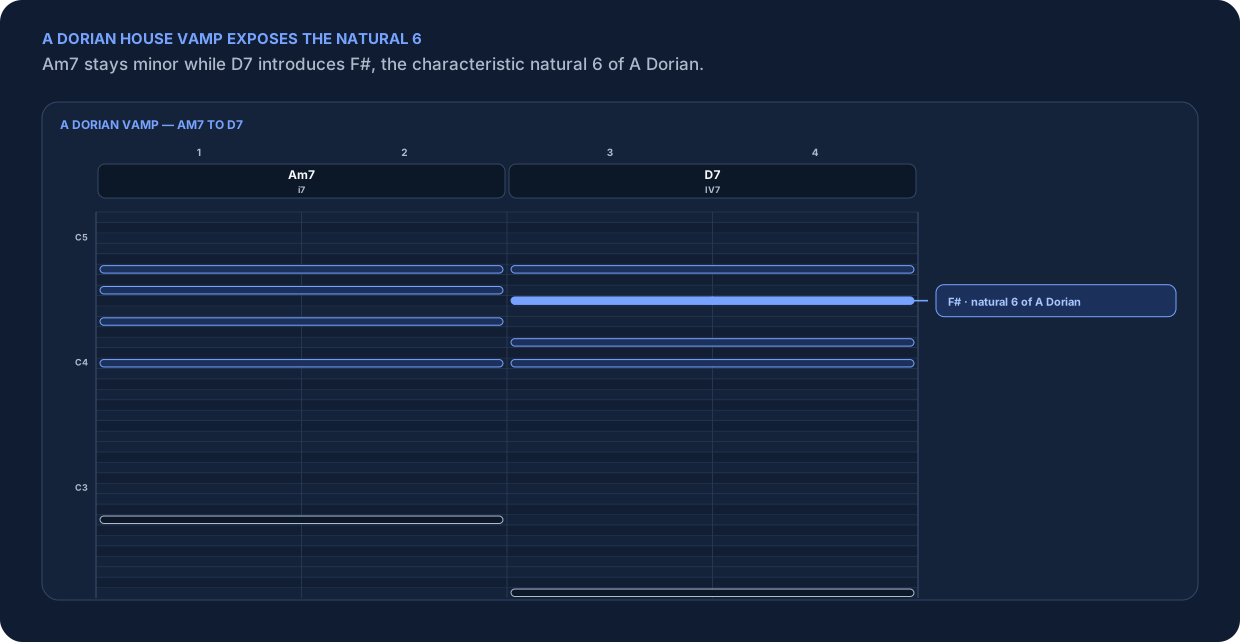
The important difference from natural minor is the natural 6.
A very clear Dorian vamp is:
i7 – IV7
In A Dorian:
Am7 – D7
The D7 chord contains F#:
D – F# – A – C
That F# is the natural 6 of A Dorian and helps reveal the mode.
Compare this with A natural minor, where the fourth-degree chord would normally be Dm rather than D major or D7.
This small change can make a minor-centered loop feel more open, warm or groove-oriented.
It is one reason Dorian appears so naturally in house, funk and jazz-influenced dance music.
Two chords can be enough
The Dorian example above also demonstrates something important about house writing:
Am7 → D7
is already a complete musical idea.
There is no requirement to turn it into four chords.
A two-chord vamp can leave more room for:
- bass movement;
- rhythmic chord stabs;
- vocal phrases;
- percussion;
- filtering and automation;
- changes in voicing;
- arrangement layers entering and leaving.
If the track needs a stable groove, adding more harmony can sometimes make it less effective rather than more interesting.
Major-key house can be warm rather than simply bright
House does not need to be minor.
A major-key example from the Studio catalog is:
Imaj7 – IVmaj7
In C major:
Cmaj7 – Fmaj7
The notes are:
Cmaj7 = C – E – G – B
Fmaj7 = F – A – C – E
These two chords share the notes C and E.
That makes smooth voice leading easy and can give the progression a warm, flowing quality.
In the source-backed House form used by the Studio, each harmony can span two bars. That means the harmonic movement is extremely simple:
two bars of Cmaj7, followed by two bars of Fmaj7.
The interest can come from what happens inside those four bars rather than from adding more chord changes.
Seventh chords are color, not a requirement
House harmony often works well with seventh chords because they add color without necessarily changing the underlying harmonic function.
Compare:
Am → Dm
with:
Am7 → Dm7
The second version contains more internal color, but both can serve a similar basic harmonic role.
Common useful colors include:
- minor sevenths;
- major sevenths;
- dominant sevenths;
- add9 chords;
- ninths in more extended voicings.
But adding extensions everywhere can quickly make a progression dense.
A simple triad may be exactly right for a bright piano stab.
A minor seventh may suit a deeper loop.
A major seventh may create warmth.
A ninth can add openness.
The chord symbol is only part of the sound. Where those notes are placed matters just as much.
Voicing can matter more than changing the progression
Imagine this progression:
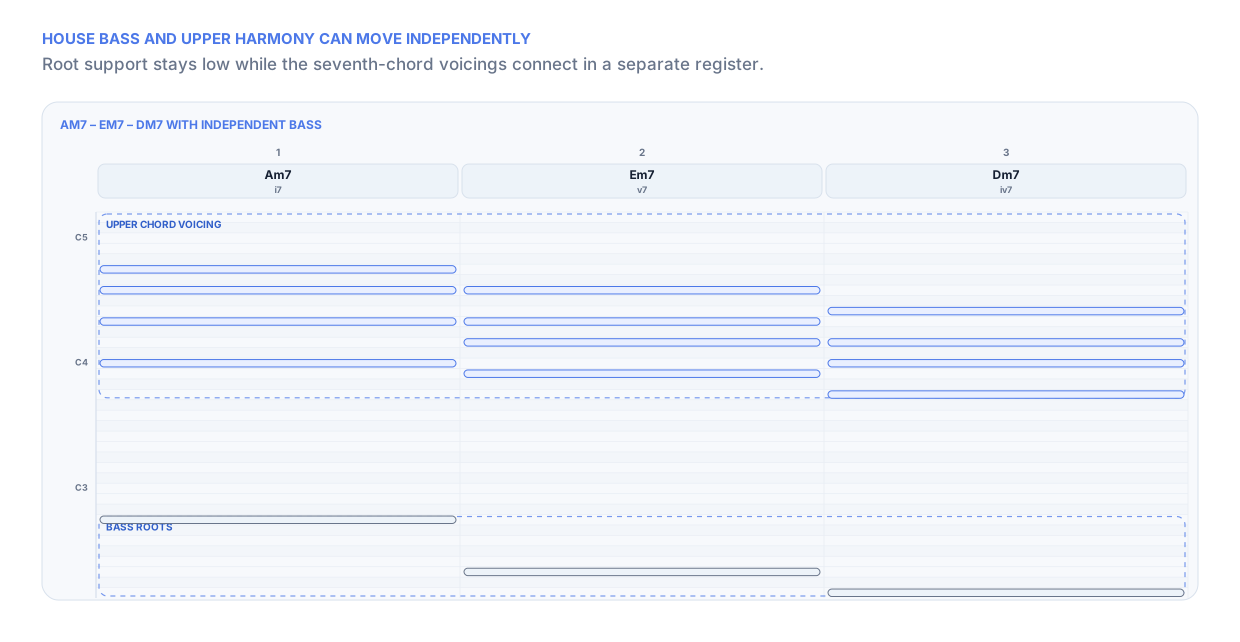
Am7 – Em7 – Dm7
If every chord is played as a block in root position, the notes may jump around more than necessary.
A smoother approach keeps common tones where possible and moves the other notes by small distances.
That is voice leading.
House benefits from this because repeated chord stabs make every change very exposed. If the upper notes jump awkwardly, you hear that jump over and over.
Smooth upper voices can make even a simple progression sound more deliberate.
The bass does not need to follow the exact same voicing.
A useful house arrangement often treats the low end and the upper chord as separate layers:
- bass provides weight and groove;
- the chord provides harmonic color;
- the upper voices move smoothly between changes.
This also leaves room for inversions and slash-bass ideas without making the low end muddy.
The bass can change how the same chord feels
A chord label does not tell you everything about the bass line.
The upper harmony might stay almost unchanged while the bass moves underneath it.
Or the bass may stay on one note while the chord above changes.
Both approaches can create movement without adding more chord events.
For house, that distinction is especially useful because the bass is often rhythmically important in its own right.
A progression should therefore not be treated as a collection of self-contained piano blocks.
Harmony and bass can cooperate without always moving in exactly the same way.
Root position is not automatically the best choice
Suppose every chord places its root at the bottom and all upper notes in the same close position.
That is easy to understand, but it can produce large jumps.
Inversions let you reorder the chord tones while preserving the chord identity.
For example, the same C major chord can appear as:
C – E – G
or:
E – G – C
or:
G – C – E
In a house progression, an inversion can keep the upper voices close to the previous chord while the bass continues to play the root separately.
This often produces a smoother result than moving the entire chord block up and down.
Four-chord loops still work perfectly well
Short vamps are useful, but house is not limited to them.
A familiar cross-genre minor loop is:
i – ♭VI – ♭III – ♭VII
In A minor:
Am – F – C – G
This kind of progression can work in house, trance, pop and EDM.
What makes the house version feel like house is usually not the Roman numerals alone.
It may be:
- the harmonic rhythm;
- a piano or organ stab;
- smoother voicing;
- a separate bass line;
- tempo;
- groove;
- chord extensions;
- repetition and arrangement.
The same progression can therefore belong naturally to several styles.
Genre is not encoded in four chord symbols.
Piano house and deeper house do not need the same treatment
Terms such as piano house, deep house or melodic house describe overlapping musical traditions rather than strict harmonic systems.
Still, they often encourage different choices.
A piano-driven track may benefit from clearer attacks and relatively direct chord shapes. Seventh chords, gospel- or soul-influenced movement and rhythmic inversions can add character, but the piano itself already provides a lot of harmonic information.
A deeper or smoother track may leave more space between changes and make greater use of minor sevenths, major sevenths, ninth colors or Dorian harmony.
A melodic house progression may use a longer emotional loop with more obvious phrase-level movement.
These are tendencies, not requirements.
The useful question is always whether the harmony supports the role it needs to play in the track.
Avoid changing chords just to create variety
One common temptation is to hear a repetitive loop and assume it needs another chord.
But repetition can be solved in many other ways:
- change the inversion on the second pass;
- alter the rhythm of the chord stab;
- remove the chord for part of the phrase;
- change the bass movement;
- open or close a filter;
- add or remove one chord tone;
- let a melody create the variation;
- change the final chord only on every second repetition.
Those choices can preserve the identity of the loop while still creating development.
A new chord is only one possible form of variation.
A practical House starting point in the Studio
If you want to explore house harmony without deciding too much in advance, a useful starting point is:
- choose House as the style;
- try Minor / Aeolian for emotional, loop-friendly harmony;
- try Dorian for a more open minor color;
- try Major / Ionian when you want warmer or brighter harmony;
- listen to the result before judging it from the chord names alone.
The House style in Chord Progression Studio starts around the low-to-mid 120 BPM range, but tempo does not determine the harmony.
More importantly, listen for:
- whether the loop wants to repeat;
- whether the upper voices connect smoothly;
- whether the bass and chord layers leave room for each other;
- whether extensions add useful color;
- whether the harmony supports the groove rather than competing with it.
A good house progression does not need to prove how much theory it knows.
It needs to give the track a harmonic world that is worth staying in.